
Radioactive waste advisers training course
Course dates
Monday 5 - Wednesday 7 October 2026.
Venue
The Institute of Cancer Research and The Royal Marsden NHS Foundation Trust, Sutton, Surrey, UK.
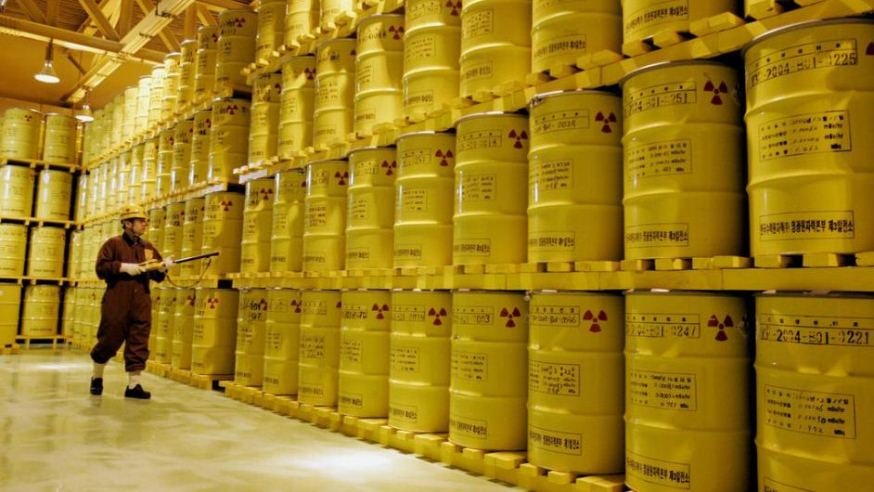
Credit: AP Photo/Lee Jin-man
This course is organised by the Joint Department of Physics of The Royal Marsden NHS Foundation Trust and The Institute of Cancer Research, London.
Course outline
This course provides the theoretical background and training necessary for the management of unsealed and sealed radioactive substances in hospitals.
The first day covers the following subject areas: interaction and units, instrumentation, radiation effects and risks and the regulatory framework. The following two days cover the legislation, applying for a Permit and compliance with the Permit conditions, the transport regulations and practical management of radioactive substances in hospitals. As well as lectures, there will be workshop sessions covering some practical issues. This course focusses on the Environmental Permitting (England and Wales) Regulations 2016.
The course is at a level suitable for hospital physicists working in the field of radiation protection or those who want to expand their knowledge in this field. It is particularly suitable for those wishing to become Radioactive Waste Advisers (RWA), and covers the Basic Underpinning Knowledge (Basic Syllabus) as set out in the RPA2000 Guidance.
This is a CPD course approved by IPEM.
Those wishing to use the course towards RWA certification can sit an optional marked short exam.
Provisional Lecture List
Day 1: Review and effects of radiation
- Interactions and units
- Instrumentation
- Sources of exposures
- Risks and effects
- Radiation protection framework
- Other legislation
Day 2: Statutory requirements
- EPR2016
- Cradle to grave: records management
- Transport Regulations
- Applying for an environmental permit
- IRAT2
- Permit compliance / BAT
Day 3: Radioactive source management in hospitals
- HASS and other sealed sources
- Security
- RWA certification
- RWA Portfolio Assessment
- Optional assessment
Workshops
- EPR audits
- Incidents
The organisers may need to alter the final programme to fulfil practical commitments.
Course fees
| Full three days including first day review: | Two-day module excluding 1st day review (for those who have already attended RPTC in past 5 years) | |
| Payments received on or before 7 August 2026 | £460 | £320 |
| Payments received after 7 August 2026 | £525 | £380 |
The cost includes lunches and light refreshments. Lecture notes and a certificate of attendance are provided.
Registration
Downloadable Registration Form
You will be allocated a place on receipt of a completed registration form and purchase order or completed online payment. We are unable to accept provisional bookings.
The number of participants is limited, so early booking is advised. Applications from outside the UK are welcome.
Closing date for registrations: Friday 11 September 2026
Related documents
2 Day Course - Provisional Timetable 2026
3 Day Course - Provisional Timetable 2026
Contacts
Course organiser: Dr Allison Craig
For registration details and any other queries contact:
Course administrator: Mrs Jessica Keegan.
Latest ICR News

New trial design could improve early-stage cancer studies involving CAR-T therapies

Researchers develop gene-editing platform to systematically decode histone function in mammalian cells

New clinical trial design could improve dose selection, maximising treatment efficacy and safety
