
Centre for Evolution and Cancer
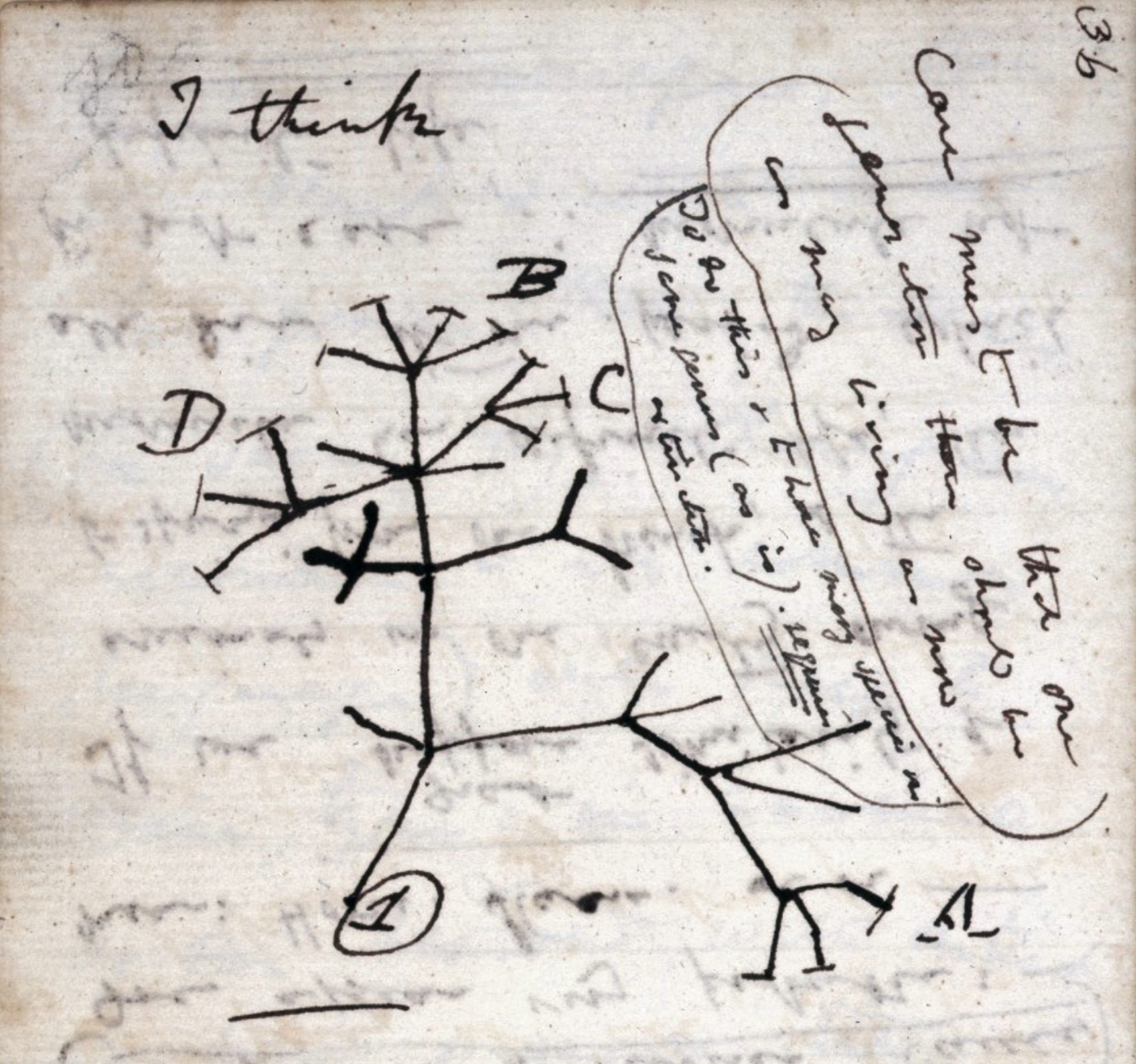
At our Centre for Evolution and Cancer, researchers are applying Darwin’s principle of natural selection within ecosystems to our understanding of why we develop cancer and why it is so difficult to treat.
Researchers at the centre are answering three big questions in cancer medicine:
- Why are humans so vulnerable to cancer?
- What determines the unpredictable development of cancers in the body over time?
- And why is drug resistance so frequent?
Professor Trevor Graham, Professor of Genomics and Evolution, is the Centre's Director.
Evolutionary biology isn’t a sub-topic of cancer sciences - it is a conceptual framework for everything in cancer. In recognition of this important development and the research opportunities it provides, the Centre for Evolution and Cancer was set up at The Institute of Cancer Research in 2013, under the leadership of Professor Sir Mel Greaves. It was established with support from a Strategic Award from the Wellcome Trust.
The idea that cancer is fundamentally a process of somatic cell evolution was first advocated in the 1970s. Since then, the concept has been validated and greatly elaborated, highlighting the striking parallels with Darwinian evolution by natural selection in ecosystems.
Cancer genomics has provided detailed genetic descriptions and technologies for interrogating single cells and multi-regional small biopsies, revealing space-time genetic diversification of cancer cells and allowing us to infer clonal phylogenies, or evolutionary history. It’s a striking fact that every patient’s cancer has an individually unique and variegated clonal architecture and evolutionary trajectory.
This represents a paradigm shift with major implications for the way we think about the fundamental biology of cancer, the emergence of drug resistance and our attempt to control it. This also applies to evolutionary considerations of why humans are so vulnerable to cancer.
How we research at this centre
Computational biologists, geneticists, cell biologists and clinical scientists are working together to explore exciting new avenues of cancer-related evolutionary research. Researchers are identifying the genetic diversity within individual tumours, and exploring the use of genetic profiling of tumours as fingerprints that could predict progression of disease, metastases or drug resistance.
The Centre's overarching objective is to assemble a multidisciplinary team of investigators that will interrogate cancer afresh using evolutionary principles derived from ecology, enabled by state-of-the-art cellular, genomic and bioinformatic technologies. Our objectives include the following:
- To provide an evolutionary logic for vulnerability to cancer in ageing humans and inherent variation in risk between individuals.
- To optimise technologies for in depth analysis of clonal architectures and dynamics in cancer.
- To integrate cancer genomics, clonal evolution with ecosystem and therapeutic selective pressures.
- To develop quantitative evolutionary parameters of cancer clones and their microenvironments that are predictive of future progression of disease or the emergence of drug resistance.
Our long term aspiration is to help resolve the challenge of how best to thwart the evolutionary resilience of cancer in order to reduce the burden of cancer on society.
The Centre for Evolution and Cancer brings together leading researchers to thwart the evolutionary resilience of cancer in order to reduce the burden of cancer on society.
Professor Trevor Graham

Director and Faculty Group Leader
Professor Trevor Graham joined the ICR as Director of the Centre for Evolution and Cancer in spring 2022. He is group leader of the Genomics and Evolutionary Dynamics laboratory.
For the previous 8.5 years Trevor led the Evolution and Cancer laboratory at the CRUK Barts Cancer Institute within QMUL. Trevor’s laboratory was the first mathematical theory-led laboratory in the Institute. He co-led the development of computational biology as core research theme at Barts, culminating in the establishment of the Centre for Genomics and Computational Biology in 2019, where Trevor was deputy lead.
Trevor’s research is focused on understanding the evolutionary dynamics of cancer development and translating this knowledge to improve clinical management of disease. His laboratory combines expertise in evolutionary theory, mathematical modelling and bioinformatics, together with cutting-edge wet-lab analyses foremost in genomics, single cell sequencing and molecular pathology.
His research has four main themes:
- Population genetics approaches to cancer genomics.
- Evolutionary dynamics of colon cancer development, metastasis and response to treatment.
- Enabling early detection of cancer risk inflammatory bowel disease (IBD).
- Prevention of drug resistance during cancer treatment by evolutionary steering.
Trevor’s undergraduate training was in mathematics (Mathematics MSci, Imperial College, 2002) before embarking on an interdisciplinary PhD (MRes Modelling Biological Complexity, UCL, 2004; PhD Mathematical Biology, UCL, 2009). Following two postdocs, the first in Professor Sir Nicholas Wright’s lab at the CRUK London Research Institute, then with Professor Carlo Maley at UCSF, where Trevor continued to mix mathematics with molecular biology. Trevor became a group leader at the CRUK Barts Cancer Institute in 2013.
Trevor’s research and his group are funded by CRUK, the Wellcome Trust, the US National Institutes of Health, MRC, BBSRC and Bowel Research UK.
Dr Alejandra Bruna
Faculty Group Leader
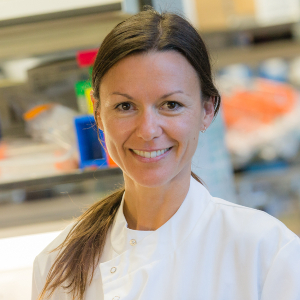
Dr Alejandra Bruna established her laboratory at The Institute of Cancer Research in April 2020. She leads the Preclinical Modelling of Paediatric Cancer Evolution (PCE) Lab, which investigates how phenotypic plasticity shapes cancer evolution, therapy resistance and relapse.
Her research focuses particularly on paediatric solid tumours, including neuroblastoma, hepatoblastoma and rhabdomyosarcoma. These cancers, characterised by relatively low mutational burden, provide a powerful system to dissect non-genetic mechanisms of tumour adaptation.
A central question of the lab is: how do cancer cells adapt to stress and treatment in the absence of extensive genetic diversity? Rather than viewing tumour heterogeneity as a static feature, Dr Bruna’s work conceptualises plasticity as a dynamic, selectable trait that can bias future evolutionary trajectories.
By integrating single-cell genomics, lineage tracing, molecular recording, experimental evolution and quantitative modelling, the PCE Lab aims to move beyond descriptive catalogues of cell states towards predictive frameworks of tumour adaptation. Using temporally controlled perturbation systems and evolutionary selection experiments, the group directly measures how cancer cell populations respond, diversify and stabilise under defined therapeutic pressures. The long-term goal is to anticipate evolutionary escape routes and inform therapeutic strategies that prevent relapse.
Key research themes
1. Phenotypic plasticity and cancer evolution
The lab studies how reversible cell-state transitions enable tumour survival under therapeutic pressure, and when plasticity itself becomes an adaptive advantage. This includes defining how plasticity interplays with fitness, selection and clonal dynamics in an evolving population.
2. Transcriptional noise and regulatory variability
A major focus is understanding how stochastic gene expression and chromatin organisation generate phenotypic diversity, even in genetically homogeneous tumours. The group combines statistical modelling with experimental perturbation to dissect the regulatory origins of noise-driven plasticity-led adaptive evolution.
3. Lineage tracing and molecular recording
The lab has pioneered and applied expressed and evolving barcode systems to reconstruct cell histories and directly quantify phenotypic transitions over time in solid paediatric cancer models. These approaches enable measurement of how cell states are exploited, stabilised or selected during treatment.
4. Paediatric cancers as evolutionary systems
Paediatric tumours provide a uniquely tractable model to study non-genetic adaptation due to their low mutational burden. The lab leverages this to uncover general principles of cancer evolution that may be obscured in adult cancers.
5. Translational and precision oncology applications
The group is developing functional and molecular readouts of plasticity to identify tumours at high risk of adaptive resistance, with the aim of informing treatment strategies that anticipate tumour evolution rather than react to it.
Dr Luis Zapata Ortiz
Faculty Group Leader
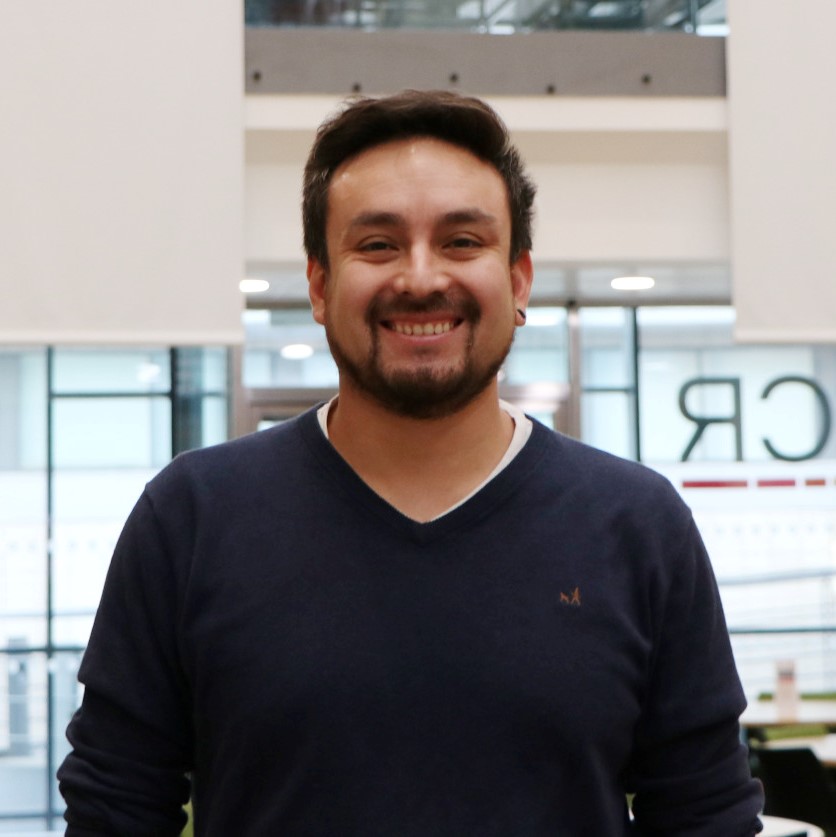
Dr Luis Zapata Ortiz leads the Evolutionary Immunogenomics Group at the ICR. His work has focused on developing immunogenomic-based metrics to predict response to immune checkpoint inhibitor therapies. His groundbreaking research, including publications in esteemed journals such as Nature Genetics and Genome Biology, has shed light on the clinical impact of immunoediting and the strength of immune selection.
His academic journey began with a major in Biotechnology Engineering at the University of Chile, a short-stay in University of California in Davis, followed by a Ph.D. in Biomedicine at the Centre for Genomic Regulation in Barcelona. As a Marie Curie Postdoctoral Fellow at the ICR, Luis made significant contributions to understanding how evolution shapes the genome of cells within our bodies, particularly focusing on the impact of the immune system on genetic variability.
He possesses a diverse skill set, including expertise in mathematical modelling, evolutionary theory, population genetics, and proficiency in computational biology. Dr Zapata Ortiz excels in implementing statistical and machine learning algorithms and has extensive experience analysing large datasets using high-performance computing clusters.
Furthermore, Dr Zapata Ortiz has made significant contributions to the understanding of genetic variation in cancer genomes and healthy somatic tissues. His studies have demonstrated negative selection forces against alterations in essential genes and regions exposed to the immune system in the cancer genome. He also explored signals of selection on healthy somatic tissues and developed a mathematical model of dN/dS using stochastic branching processes.
Dr Zapata Ortiz's multidisciplinary expertise, ranging from mathematical modelling and population genetics to computational analysis and genomics, positions him as a leading expert in the field. His contributions have advanced our understanding of evolution's impact on the genome and its implications for disease.
Outside the lab, he enjoys time with his family, swimming, playing football and tennis with friends and competing in poker tournaments.
Dr Ben O'Leary
Faculty Group Leader
Ben leads the Evolution & Translational Genomics Group at The Institute of Cancer Research and is an Honorary Consultant in Clinical Oncology at The Royal Marsden Hospital. Ben's research is focused on understanding the evolution of resistance to cancer therapies in head and neck cancers, including the use of liquid biopsies. He leads several translational studies and clinical trials at The Institute of Cancer Research and The Royal Marsden.
Ben initially completed a degree in Aerospace Engineering at the University of Cambridge before training in medicine at King's College London. After junior medical training in London he was awarded an NIHR Academic Clinical Fellowship in Clinical Oncology in 2012 at The Royal Marsden Hospital, The Royal Sussex Hospital, and The Institute of Cancer Research.
Ben then undertook a Medical Research Council Clinical Research Training Fellowship in Professor Nick Turner's Molecular Oncology lab at The Institute of Cancer Research in 2015, working on circulating tumour DNA and the evolution of resistance to CDK4/6 inhibitors. Subsequently, he was appointed as an NIHR Academic Clinical Lecturer in 2019, with a visiting position in Peter Van Loo’s Group at The Crick in London, then MD Anderson Cancer Center in Texas, working on cancer evolution. He was appointed as Clinician Scientist at The Institute for Cancer Research and The Royal Marsden Hospital in 2022. In 2024, Ben received a Wellcome Discovery Research Early Career Fellowship to support his research into the evolution of treatment resistance in head and neck cancer.
.jpg?sfvrsn=62773399_2)
The Darwin Cancer Blog
Led by Professor Mel Greaves, this blog provides a forum for the discussion of how an evolutionary perspective is changing thinking about cancer.